Bologna Food Tours: The Complete Guide
Everything you need to choose and book a Bologna food tour — the best tour types, what you eat, the top operators, when to go, and what to expect.
Bologna carries three nicknames. La dotta — the learned — honours the University of Bologna, founded in 1088 and widely regarded as the oldest university in the Western world. La rossa — the red — refers to the warm terracotta of its rooftops and covered porticoes. And la grassa — the fat — is a compliment: a celebration of centuries of exceptional cooking built on egg pasta, cured pork and aged cheese. A Bologna food tour is the most rewarding way to understand all three.
Bologna sits at the heart of Emilia-Romagna, arguably Italy’s most important food region — the homeland of Parmigiano Reggiano, prosciutto di Parma, traditional balsamic vinegar of Modena, mortadella, Lambrusco and the egg-pasta tradition that produced tortellini and tagliatelle. A guided tour of the city compresses all of that into one afternoon and gives you the vocabulary to eat well for the rest of your trip.
The tour below is the highest-volume walking food tour in the city. Prices and departure times move with the season, so check live dates before you plan around it.
Two families of tour, and a third option
Bologna’s food-tour scene has matured into two clear branches, with cooking classes as a popular third.
Walking food tours of the historic centre
The default first-timer experience: three to four hours on foot through the Quadrilatero market district and the surrounding medieval lanes, visiting salumerie, fresh-pasta shops, an osteria or wine bar, and a gelateria. You taste eight or more specialities, paired with local wine, with an expert local guide providing context at every stop. Groups typically cap around ten. Most operators run Monday to Saturday, with Sundays private-only.
Full-day Food Valley tours
Vehicle-based day trips of eight to ten hours that leave Bologna’s city limits entirely and visit artisanal producers in the surrounding countryside: a Parmigiano Reggiano dairy (watching the dawn cheesemaking and the vast ageing rooms stacked with 40-kilo wheels), a traditional balsamic vinegar acetaia in Modena (tasting across the 12-year and 25-year DOP), and a prosciutto or cured-meat producer in Langhirano or elsewhere. Usually includes a long multi-course lunch with wine. Expect an early start — some depart at 7am — and to return pleasantly over-served.
Cooking classes with a sfoglina
A different proposition: you spend roughly three hours in a kitchen, learning to mix and roll sfoglia (egg-pasta dough) by hand with a wooden mattarello, cutting tagliatelle to the correct width, folding tortellini, and sitting down to eat everything you’ve made with wine. The walk is replaced by technique. Many visitors do one and then the other — a food tour on day one, a cooking class on day two.
To compare these options in detail, see our food tour vs cooking class guide. Bologna rewards more than a day. If you’re spending two or three nights, pair a walking food tour on your first morning with a cooking class the next day — tasting widely first, then learning to reproduce what you loved. Add a full-day Food Valley trip if you have an extra day: visiting a Parmigiano Reggiano dairy, an acetaia in Modena and a prosciutto cellar ties the produce back to the landscape in a way no city tour can match. And don’t leave without exploring the Quadrilatero on your own at least once — wine from the Osteria del Sole, mortadella from Simoni, and a scoop from Gelateria Gianni.
The top operators
Taste Bologna is the best-known dedicated city operator — widely described as the first food tour in Bologna — and consistently reviews at 4.8/5 across thousands of guests. Its flagship Classic Bologna Food Tour runs about four hours, caps at ten guests, and covers gourmet coffee, the Quadrilatero and Mercato delle Erbe markets, a fresh-pasta shop where sfogline make tortellini and tagliatelle by hand, a stop at the historic Osteria del Sole (trading since 1465), and gelato. It also offers an evening sunset tour and a hands-on pasta cooking class.
Italian Days Food Experience dominates the full-day market: a vehicle-based tour to a Parmigiano Reggiano dairy, a balsamic acetaia and a prosciutto producer, with a long, boisterous multi-course lunch with wine. Ranked near the top of all Bologna experiences on Tripadvisor with more than 2,000 reviews; groups run up to 25. The pace is energetic and the quantities are large.
Delicious Bologna runs a four-hour walking tour of the historic centre plus a half-day countryside tour and a pasta cooking class.
Curious Appetite (run by sommelier and food writer Coral Sisk) offers the La Grassa tasting tour — roughly three hours, five or more stops with wine pairings and pasta-lab visits — pitched at the gastronomically serious traveller.
Emilia Delizia specialises in producer visits (Parmigiano, balsamic, Parma ham) and pasta classes, operating since 2009.
Secret Food Tours, Eating Europe and Streaty (all international chains with local guides) run walking tours of the historic centre with strong recent reviews. The home-cook network Cesarine and Withlocals offer private options in a local’s kitchen.
The booking aggregators GetYourGuide and Viator list dozens of experiences. Read recent reviews and confirm the operator and group-size cap before committing — quality varies.
What you’ll actually eat
Bologna’s most important foods carry legal protection. The recipes for tortellini filling, tagliatelle width and ragù alla bolognese have all been formally registered at the city’s Chamber of Commerce, and Parmigiano Reggiano, mortadella, prosciutto di Parma and traditional balsamic vinegar of Modena all carry EU DOP or IGP protection. Here is what you’ll encounter.
Tortellini in brodo. Tiny hand-folded parcels of fresh egg pasta — filled with pork, prosciutto, mortadella and Parmigiano, sealed into rings — served in a clear capon or beef broth. The filling recipe was formally deposited at Bologna’s Chamber of Commerce in 1974; the shape specification was added in 2008. This is the city’s emblematic dish, especially at Christmas.
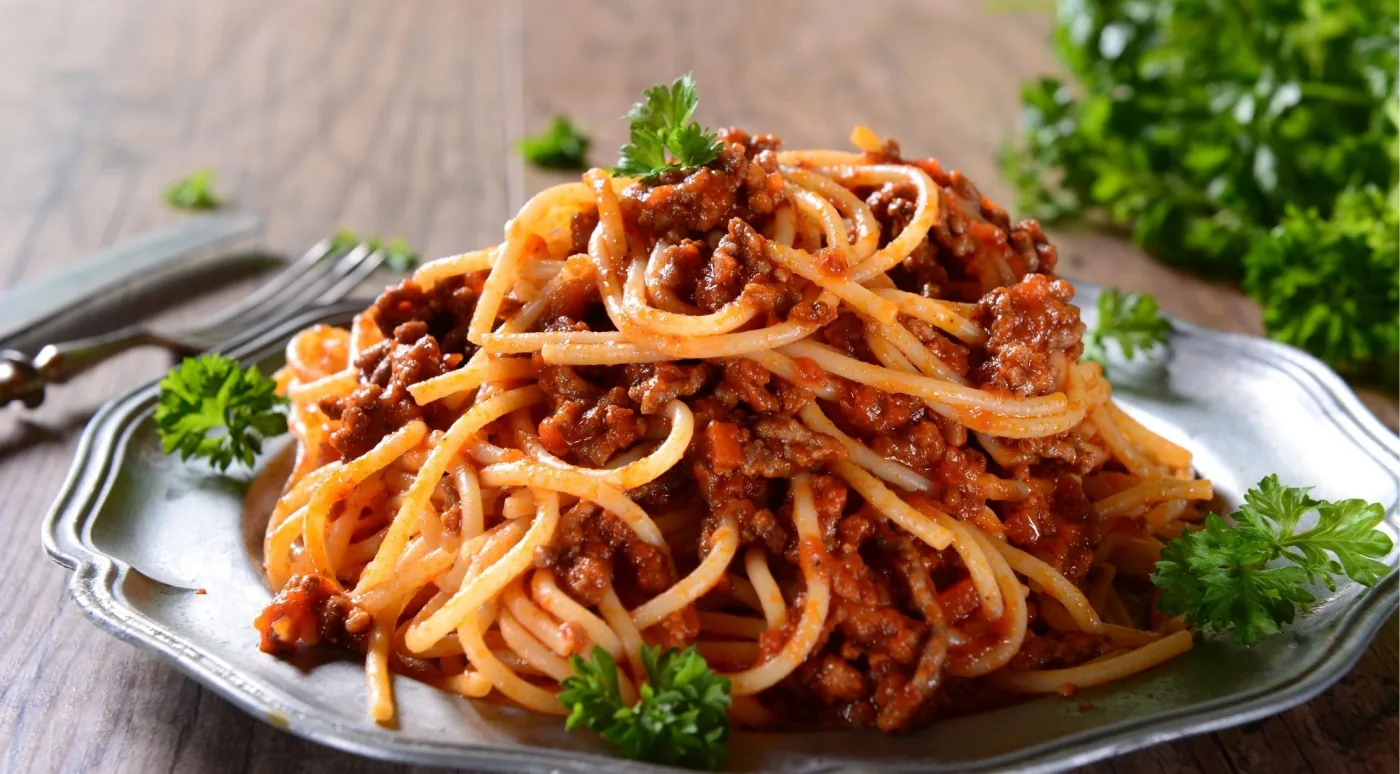
Tagliatelle al ragù. The real “bolognese.” Flat, hand-rolled egg-pasta ribbons dressed with a slow-cooked meat ragù — never on spaghetti. The ragù recipe was deposited in 1982 (and updated in 2023); the correct width of a cooked tagliatella (8 mm, or 1/12,270th of the height of the Asinelli Tower) has been fixed since 1972.
Lasagne verdi alla bolognese. Green (spinach) egg-pasta sheets layered with ragù, béchamel and Parmigiano and baked until the edges crisp. The official recipe was deposited in 2003.
Mortadella di Bologna IGP. The silky, subtly spiced cooked pork sausage the city gave to the world — and the ancestor of what Americans call baloney. Best eaten sliced carta velina (tissue-paper thin) at a historic salumeria.
Parmigiano Reggiano DOP. Aged 12, 24 or 36 months. Good tours let you taste across ages: 12 months is pale and milky; 24 months is granular and balanced (the standard for tortellini filling); 36 months is dry, crumbly and intensely nutty.
Aceto Balsamico Tradizionale di Modena DOP. Made only from cooked grape must, aged a minimum of 12 years in a diminishing battery of wooden casks, sold in the protected bulb-shaped Giugiaro bottle. Entirely different from commercial balsamic vinegar. A food tour teaches you to tell them apart and drizzle it on aged Parmigiano.
Prosciutto di Parma DOP. Aged a minimum of 14 months — pork and salt only, no nitrites, no colouring.
Gnocco fritto, crescentine/tigelle, piadina. The fried or griddled flatbread family, served hot and split open with cured meats and soft cheeses like squacquerone.
Lambrusco and Pignoletto. The region’s sparkling red and crisp white, both designed to sit beside rich pasta and salumi rather than upstage them.
For a dish-by-dish breakdown of everything Bologna is famous for, see our guide to what to eat in Bologna.
Where you walk: the Quadrilatero and the historic centre
Nearly every city walking tour begins in the Quadrilatero — the tangle of medieval market lanes immediately south-east of Piazza Maggiore. Via Pescherie Vecchie (old fishmongers), Via Drapperie (cloth merchants), Via Caprarie (goat-sellers), Via Clavature (locksmiths): the street names still record the trades of the medieval guild economy. Today those names survive around one of the densest concentrations of historic food shops in any Italian city — Tamburini (since 1932), Salumeria Simoni (since 1960), Paolo Atti & Figli (since 1868), and the Osteria del Sole (since 1465, wine only, bring your own food).
For a full guide to the Quadrilatero — the shops, the markets compared, a self-guided eating route and the aperitivo scene — see The Quadrilatero, Bologna.
Timing: when to go and when to book
Best seasons. Spring (April–May) and autumn (September–October) are the ideal windows. Weather is mild, the markets are at their most generous, and autumn overlaps with truffle season in the Apennines. These are also the busiest months, so book ahead.
Avoid Sundays for city tours. Most Quadrilatero shops, the Osteria del Sole and the scheduled walking tours run Monday to Saturday; Sundays tend to be private-only. Food Valley producer tours may still run on Sundays — check.
August. Around Ferragosto (15 August), a large share of family-run shops and trattorias close: in 2024 only about one restaurant in three in the city stayed open that week. If August is unavoidable, check that your tour and restaurants are running that week before you plan around them.
Book early. The best small-group walking tours and private cooking classes fill four to six weeks ahead during spring and autumn. Check availability as soon as your dates are confirmed.
For a month-by-month calendar of weather, crowds and what to eat by season, see the best time to visit Bologna; for morning versus evening tours, see the best time for a Bologna food tour.
Practical tips before you go
- Come hungry. A four-hour walking tour includes enough food to replace a full meal; a Food Valley day trip will comfortably replace two.
- Wear comfortable shoes. You’ll be on cobblestones for three to four hours — there is no dress code, but trainers beat heels.
- Dietary restrictions. Vegetarian is manageable with advance notice; vegan is harder in an egg-pasta and cured-meat cuisine; gluten-free is challenging. Confirm with the operator at booking. For a detailed breakdown, see our dietary options guide.
- Tipping. Not mandatory. Rounding up or €5–10 for a great guide is appreciated but never expected.
- Layers for Food Valley tours. Parmigiano Reggiano ageing rooms run cold even in summer — bring a light jacket.
FAQ
Do I need to book a Bologna food tour in advance?
Yes — especially in spring and autumn, when the top small-group walking tours sell out several weeks ahead. The most popular time slots with the highest-rated guides disappear first. In quieter months you may manage with a few days’ notice, but there is no reason to risk it. Check live availability and book as soon as your dates are confirmed.
Taste Bologna Like a Local — One Unforgettable Walk
Join 1,870+ guests who rated this experience 4.8/5. Tortellini, mortadella, Parmigiano Reggiano, Lambrusco, and gelato — sampled across the historic centre with an expert local guide. Free cancellation.
Check Availability & Book