Italy Food Tours: The Best Cities to Eat In
An honest guide to Italy food tours: Bologna, Rome, Florence, Naples, Sicily and more compared by dish, price and season — and why Bologna wins on food alone.
If you want the single strongest base for a food-focused trip to Italy, choose Bologna and Emilia-Romagna. It holds more EU-protected DOP and IGP food products than any other region in Europe, it puts Parmigiano Reggiano, Parma ham and balsamic vinegar within an hour of one hotel, and it costs meaningfully less than Florence, Rome or Venice. That is the short answer, and we will make the case for it properly below.
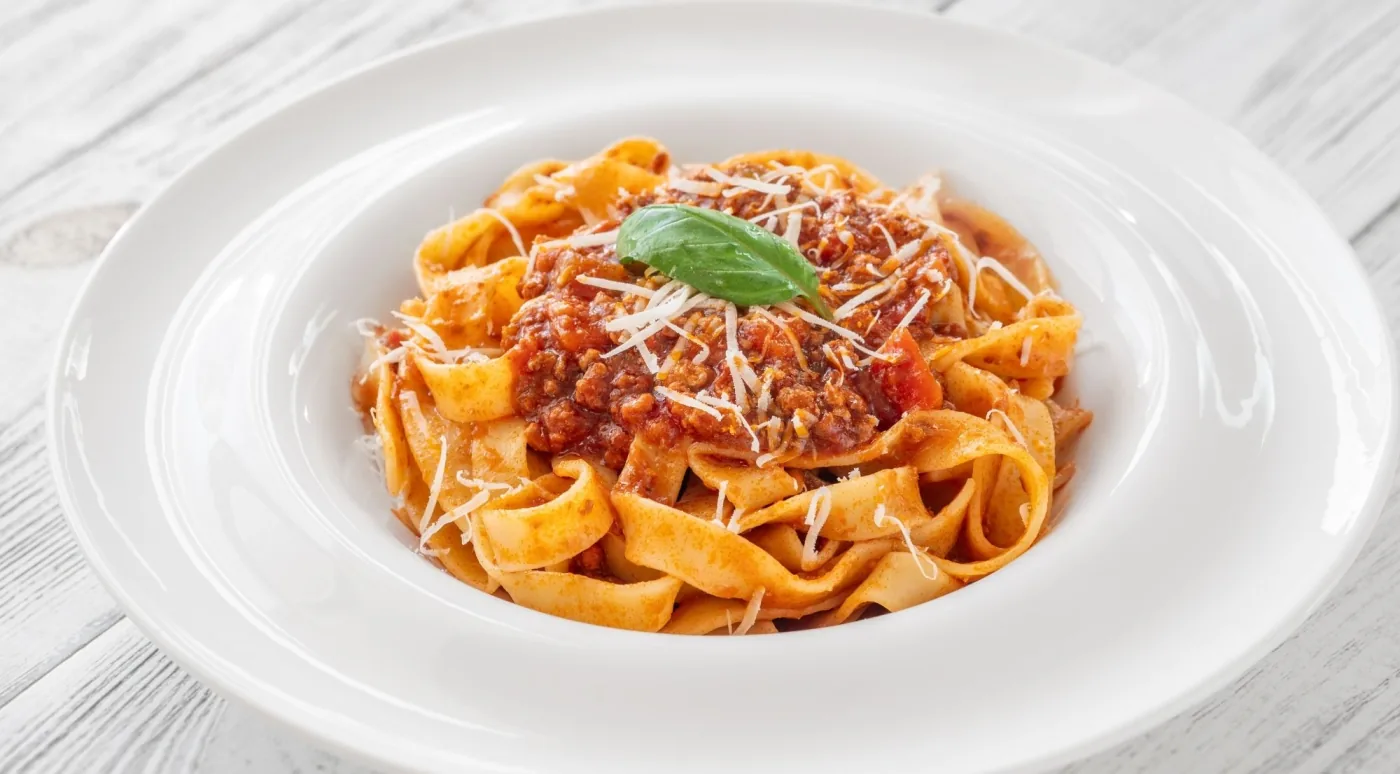
But it is not the whole story, because Italy does not have one cuisine. It has roughly twenty, and the best city genuinely depends on what you want to eat. Prices in the bands below are indicative and move with the season — check the live figure before you book anything.
TL;DR
- There is no “Italian cuisine”. There are around twenty regional ones, and the north–south splits are real: butter against olive oil, fresh egg pasta against durum semolina, rice and polenta against bread.
- Pick the region by the dish you crave. Rome for the four pastas, Naples for pizza, Palermo for street food, Piedmont for truffles and Barolo, Bologna for everything made from egg pasta, cured pork and aged cheese.
- If you can only choose one base, choose Bologna — the highest density of protected products in Europe, everything within an hour by train, and hotels roughly 30–40% cheaper than Florence.
- Go in spring or autumn, book classes and producer tours weeks ahead, and avoid mid-August, when a great many independents close.
Why Italian food is regional, not national
There is no single Italian cuisine. It is a federation of about twenty regional ones, and the differences are structural rather than decorative. Moving north to south you trade butter for olive oil, fresh egg pasta for durum semolina, and rice and polenta for bread. A Bolognese cook and a Palermitan cook are not making variations on the same tradition; they are working from different larders.
That is why “where is the best food in Italy” is the wrong question. The right one is: which region’s signatures do you actually want to eat?
On 10 December 2025, UNESCO inscribed Italian cuisine on the Representative List of Intangible Cultural Heritage, under the title “Italian cooking, between sustainability and biocultural diversity” — a recognition of exactly that regional diversity rather than of any single national dish.
Wherever you decide to base yourself, the booking pattern is the same: one walking food tour early in the trip to get your bearings, one cooking class or market tour in the middle, and one producer day — a Parmigiano Reggiano dairy near Parma, a balsamic acetaia in Modena, a Lambrusco cellar at Castelvetro, or a Motor Valley day out to Maranello and Sant’Agata on the Ferrari, Lamborghini and Pagani museums tour with lunch (from €460, rated 4.88/5 from 76 reviews) — if the region rewards it. Emilia-Romagna rewards it more than anywhere else in Italy.
Italy’s food cities and regions, compared
| Region / city | Signature dishes | Defining experience | Price band | Best season | Who it suits |
|---|---|---|---|---|---|
| Bologna & Emilia-Romagna | Tortellini, tagliatelle al ragù, mortadella, Parmigiano, balsamic, Parma ham | Food Valley producer tour plus the Quadrilatero | €€ / €€€ | Spring and autumn | The serious eater working from one base |
| Rome & Lazio | Cacio e pepe, carbonara, amatriciana, carciofi alla giudia | Trastevere, Testaccio or Ghetto crawl | €€ | Spring and autumn | First-timers wanting food plus icons |
| Florence & Tuscany | Bistecca, ribollita, lampredotto | Wine tour plus Mercato Centrale | €€–€€€ | May–June, September | Wine and steak lovers |
| Naples & Campania | Pizza napoletana, sfogliatella, mozzarella di bufala | Centro storico street food | € | Spring and autumn | Street-food lovers on a budget |
| Sicily | Arancini, panelle, cannoli, granita | Ballarò or Vucciria market tour | € | Apr–June, Sept–Oct | Adventurous eaters |
| Venice & the Veneto | Cicchetti, sarde in saor, risotto | Bacaro crawl near the Rialto | €€–€€€ | Autumn and winter | Romantics, with caveats |
| Piedmont & Turin | White truffles, agnolotti, gianduja | Langhe wine and truffle hunt | €€€ | Oct–Nov | Wine connoisseurs |
| Milan & Lombardy | Risotto milanese, ossobuco, panettone | Aperitivo and fine dining | €€–€€€ | Year-round | Urbanites and aperitivo fans |
| Puglia | Orecchiette, burrata, focaccia barese | Bari Vecchia’s “orecchiette street” | € | May–June, September | Vegetable-lovers, off-beat travellers |
€ budget · €€ mid-range · €€€ premium.
In brief. Bologna — “La Grassa”, the origin of the world’s most famous Italian foods, running from the Quadrilatero market lanes out into the Food Valley; also the hardest region in Italy for vegans. Rome — the four great pastas and Testaccio’s offal tradition, eaten in a city you were going to visit anyway. Florence — cucina povera at street level plus Chianti and Brunello above it. Naples — pizza, whose pizzaiuolo craft was UNESCO-listed in 2017, and the sweetest street food in the country. Sicily — the Arab-Norman table, and by far the most vegetable-friendly. Venice — cicchetti crawls, if you can navigate the tourist traps and the 2026 access fee. Piedmont — Alba truffles, Barolo, and the birthplace of Slow Food at Bra in 1986. Milan — risotto, ossobuco and the country’s best aperitivo culture. Puglia — orecchiette, burrata and focaccia, the vegetable-forward south.
Tour types compared
| Tour type | What it involves | Duration | Price | Who it’s for |
|---|---|---|---|---|
| Walking food tour | Guided district crawl with tasting stops | 3–4 hrs | €€ | First-timers |
| Market tour | Guided produce or street-food market | 2–3 hrs | € | Curious cooks |
| Cooking class | Hands-on lesson, then you eat it | 3–5 hrs | €€ | Hands-on learners, families |
| Producer / farm tour | Cheese, ham, oil or wine visits | Half to full day | €€€ | Serious food nerds |
| Truffle hunting | A walk with a trifolau and his dog | 2–4 hrs | €€€ | Autumn travellers |
| Multi-day culinary tour | Escorted, every meal curated | 3–10 days | €€€€ | Time-rich, zero-logistics |
| Home dining (Cesarine) | A meal or class in a local’s home | 2–4 hrs | €€–€€€ | Authenticity seekers |
| Self-guided eating | You do the research | Any | € | Budget, confident planners |
Cesarine — founded in Bologna in 2004 and now around 1,500 home cooks — is one of the most reliable routes to genuine home cooking, and it operates in almost every region.
What each format looks like in Bologna, since it is the base we recommend and the one we know best:
- Walking food tour: Bologna: Walking Food Tour with a Local Expert — from €78, rated 4.83/5 across 2,061 reviews, and the most-reviewed food experience in the city by a wide margin.
- Market tour: Bologna: Guided Food Markets Tour — from €42, rated 4.83/5 from 89 reviews. The cheapest way into the Quadrilatero with someone who knows the stallholders.
- Cooking class: Bologna: Pasta Cooking Class, Ragù, Spritz, Wine and Gelato — from €63, rated 4.93/5 across 1,319 reviews, and the highest-rated experience on this site with a review count worth trusting.
- Producer tour: Parma: Cheese, Ham and Balsamic Vinegar Tour with Tastings — from €170, rated 4.82/5 across 325 reviews. Parmigiano, prosciutto and balsamic in one day.
- Home dining: Bologna: Pasta-Making Class at a Local’s Home — from €89, rated 5.0/5 from 104 reviews. The Cesarine format, booked directly.
- Self-guided eating: Bologna: Self-Guided Food Tasting Tour with Vouchers — from €43, but rated only 4.06/5 across 149 reviews, which is comfortably the weakest score on this page. It is a voucher book, not a tour, and the reviews reflect that. Read them before you buy.
- Truffle hunting is the one format we cannot recommend a Bologna product for: the local listing near Sasso Marconi has no reviews at all yet. For truffles, go to Piedmont in October or November.
How to choose, by traveller type
- First-time visitor to Italy → Rome or Florence. You will be there for the sights anyway, and both eat well.
- Returning visitor → Bologna, Puglia or Sicily.
- Pasta obsessive → Bologna, and it is not close.
- Wine-led → Piedmont or Tuscany.
- Street-food-led → Naples or Palermo.
- Travelling with children → Naples for pizza, Bologna for pasta classes. Both formats hold a child’s attention.
- On a budget → the south. Naples, Palermo and Bari all eat brilliantly for very little.
- Luxury → Piedmont in truffle season, or a private Food Valley producer day.
- Vegetarian or vegan → Emilia-Romagna is the hardest region in Italy for vegans, and merely workable for vegetarians. Sicily, Puglia and Naples are far more vegetable-friendly. Our dietary options guide covers how the Bologna tours handle it.
- Gluten-free → doable everywhere. Italy has unusually high coeliac awareness and most kitchens take it seriously.
- Only one city, and it has to count → Bologna.
The case for Bologna
- Unmatched density of protected products. Emilia-Romagna holds around 45 DOP and IGP food products, more than any other region in Italy or Europe. The full breakdown is in our Emilia-Romagna Food Valley guide.
- Everything within an hour. Parmigiano dairies about 45 minutes away; Modena under 20 minutes; Parma under an hour by train.
- Rail connectivity. Florence in as little as 37 minutes, Milan around an hour, Venice around an hour and a quarter, Rome under two hours.
- Lower crowds and lower prices. Hotels run roughly 30–40% cheaper than Florence, and you are rarely queuing.
- One base, every experience. City food walks, cooking classes and producer tours all radiate from the same hotel — see every type of Bologna tour compared.
And the honest downsides. Bologna is less visually spectacular than Florence or Venice — the porticoes are wonderful but they are not the Duomo. It is the worst region in Italy for vegans. Summers are hot and humid on the plain. And August closures are real. Bologna is a place you go to eat first and sightsee second; pair it with Florence, 37 minutes away, if you want both.
Practicalities for a food trip to Italy
Seasons: spring and autumn almost everywhere, with Piedmont in October and November for truffles. Booking: cooking classes, small-group producer tours and truffle hunts need booking weeks ahead; walking tours rather less. Meal timings: lunch runs roughly 12:30 to 2:30, dinner from about 7:30 or 8, and kitchens close in between. On the bill: expect coperto (a cover charge) and sometimes servizio; both are normal and neither is a scam. No cappuccino after 11am — nobody will stop you, but you will be noticed. Aperitivo runs roughly 6 to 8pm.
Tipping is optional and far less expected than in the US or UK. Round up if the meal was good.
Spotting tourist traps: photo menus, a tout at the door, a “tourist menu” in four languages, and a location directly on the main square. Any two of those together and you should keep walking.
August: many independent restaurants close for two or three weeks around Ferragosto, particularly in the cities. Check before you travel.
Building a multi-city food itinerary
- Food Valley deep dive, 7 days. Base in Bologna the whole time and day-trip to Modena and Parma. Least travel, most eating.
- The classic, 10 days. Rome → Bologna (under two hours by train) → Florence (about 37 minutes on from Bologna). Three cuisines, two train journeys.
- The southern route, 10 days. Naples → Bari (roughly three to three and a half hours) → Sicily. Cheaper, hotter, and the most different from what most visitors expect of Italy.
Frequently Asked Questions
What is the food capital of Italy?
Bologna is the most widely cited answer, on the strength of Emilia-Romagna’s protected products and its fresh-pasta tradition — though Naples for pizza and Palermo for street food both make a serious claim.
Which Italian city has the best food?
There is no single winner, because there is no single Italian cuisine. For an all-round base, Bologna. For street food, Palermo or Naples. For wine, Turin or Florence.
Are food tours in Italy worth it?
Yes, and especially on your first day in a city — you learn where to eat for the rest of the trip. Producer tours in Emilia-Romagna are worth it for a different reason: they get you into working dairies and ageing cellars you simply cannot enter alone.
How much does a food tour in Italy cost?
A city walking tour is mid-range, a half-day cooking class more, and a full-day producer tour premium. All of it moves with the season, so check current rates rather than trusting a figure in an article.
What’s the best month for a food trip to Italy?
May, June, September or October. October and November if you are going to Piedmont for truffles. Avoid August.
Do you need to book food tours in advance?
For cooking classes, small-group producer tours and truffle hunts, yes — often weeks ahead. Walking tours can sometimes be booked a day or two out, but the best-rated ones sell out.
Which region is best for vegetarians?
Sicily, Puglia and Campania, in that order. Emilia-Romagna is the hardest, and it is harder still for vegans.
What is the best multi-day culinary tour of Italy?
We do not endorse a single operator. The strongest structure is to pair one deep region — Emilia-Romagna — with one or two contrasting ones, rather than trying to cover the country.
Is Bologna better than Florence for food?
For pure eating, we think yes. Florence wins on scenery and on wine country. They are 37 minutes apart, so the sensible answer is to do both.
What food should I not miss in Italy?
Tagliatelle al ragù and Parmigiano Reggiano in Emilia-Romagna; cacio e pepe or carbonara in Rome; a Neapolitan pizza in Naples; arancini and cannoli in Sicily; and a Tuscan bistecca in Florence.
Can you do a food tour without speaking Italian?
Absolutely. Tours aimed at international visitors run in English as standard, and many run in several other languages too.
Ready to eat your way through Italy?
Pick the region that matches your appetite and let the food lead. If you want the single best all-round base, start in Bologna. Explore our complete Bologna food tours guide, see all our Bologna tours compared, or plan the wider region with our Emilia-Romagna Food Valley guide. Go deeper with Bologna cooking classes, a Parmigiano Reggiano factory tour, the Quadrilatero market district, wine in the Colli Bolognesi, day trips from Bologna, or a free walking tour in Bologna.
Taste Bologna Like a Local — One Unforgettable Walk
Join 1,870+ guests who rated this experience 4.8/5. Tortellini, mortadella, Parmigiano Reggiano, Lambrusco, and gelato — sampled across the historic centre with an expert local guide. Free cancellation.
Check Availability & Book