A Self-Guided Food Walk in Bologna
A full-day, meal-by-meal self-guided food walk through Bologna — breakfast to nightcap, with the route, timings, costs and exactly what to order at each stop.
Bologna is nicknamed La Grassa — “the fat” — and there is no better way to understand why than to eat your way across it from the morning cappuccino to a late-night walnut liqueur. This walk is built not around a map but around the Italian eating clock: colazione, mid-morning, pranzo, the afternoon lull, aperitivo, cena and a nightcap. Follow it on your phone as you go and you will cover the whole historic centre — most of it under porticoes — at the pace the city actually eats.
This is a companion to two of our other guides. For a tight loop through the market lanes, use the Quadrilatero market district guide; for monuments and squares rather than food, follow our free walking tours in Bologna sightseeing route. Everything below costs only what you eat — but if you would rather have a guide open the doors, live prices for the city’s most-booked street-food walk are here.
TL;DR
- Learn the eating clock before you learn the map. Kitchens serve roughly 12:30–2:30pm and from about 7:30pm. Turn up at 5pm expecting a hot meal and you will go hungry.
- The whole day fits inside the historic centre, mostly under porticoes, so it works in the rain. A few kilometres of flat walking spread across 10–14 hours.
- The two unmissable stops are a trattoria plate of tagliatelle al ragù at lunch and an aperitivo at Osteria del Sole, where you bring your own food from the market outside.
- Go Tuesday to Saturday. Sunday and Monday close a great many markets, shops and trattorie, and many family-run places close for the week around Ferragosto (15 August), when in 2024 only about one restaurant in three in the city stayed open.
- Book the marquee trattorie days ahead and carry cash — several of the best places still prefer it.
The self-guided day works. But Parmigiano Reggiano dairies near Parma, balsamic acetaie in Modena, hands-on tortellini and tagliatelle classes with a sfoglina, evening Lambrusco and Pignoletto tastings, and full-day Food Valley producer circuits are all things you cannot easily arrange for yourself, and all bookable from the city.
The day at a glance
| Time | Stop | What to order | Cost band |
|---|---|---|---|
| 7:30–9:30am | Caffè Terzi / Regina di Quadri / Forno Brisa | Cappuccino + cornetto, standing at the bar | € |
| 9:30–11:30am | Quadrilatero + Mercato delle Erbe | Picnic supplies; a mid-morning espresso | € |
| 12:30–2:00pm | Trattoria (Anna Maria, dell’Orsa, da Me) or Sfoglia Rina | Tagliatelle al ragù; tortellini in brodo | €€ |
| 2:00–3:30pm | Cremeria Santo Stefano / Cremeria Cavour | One or two scoops, artisanal flavours | € |
| 3:30–5:30pm | Coffee, pastry and sightseeing | Espresso; Archiginnasio, San Petronio, porticoes | € |
| 6:00–8:00pm | Osteria del Sole / Faccioli / Bentivoglio / Pratello | Pignoletto, Lambrusco or a spritz, plus snacks | €–€€ |
| 8:00–10:00pm | Dinner — a tigelle spread or a proper trattoria | Tigelle and cured meats, or a full dinner | €€ |
| 10:00pm+ | Wine bar or amaro bar | Nocino, amaro or grappa | € |
€ budget · €€ mid-range · €€€ premium. Cost bands are deliberately qualitative — Bologna’s prices move, and a standing breakfast and a seated one at a grand café are different propositions.
First, learn the Italian eating clock
The single most useful thing to understand before you set out is when Bologna eats. Get the timing wrong and you will stand in front of a shuttered kitchen at 5pm wondering where lunch went. Get it right and the day flows effortlessly.
- Colazione (breakfast, ~7–10am). Quick, sweet and standing: a coffee and a pastry at the bar. Not a sit-down event.
- Pranzo (lunch, ~12:30–2:30pm). Kitchens fire up around 12:30 and most stop taking orders by 2:00–2:30.
- The afternoon lull, or riposo (~3–7pm). Many kitchens close completely. This is gelato-and-coffee time, not hot-meal time.
- Aperitivo (~6–8:30pm). A drink with something to nibble — the social heart of the Bolognese day.
- Cena (dinner, from ~7:30–8pm, often later). Italians eat late; 8:30 or 9pm is entirely normal.
- The nightcap. A digestivo — amaro, grappa or the local nocino — to close the evening.
The practical rule: arriving at 5pm expecting a hot cooked meal will fail. Structure the day so your two big cooked meals land inside the windows the kitchens are actually open, and fill the gaps with markets, gelato, coffee and pastry.
One more piece of etiquette worth internalising: no cappuccino after 11am. Milky coffee is a breakfast thing here; after a meal you order an espresso. Bologna is a university city and thoroughly used to visitors, so nobody will stop you — but if you want to blend in, switch to un caffè after mid-morning.
Breakfast: 7:30–9:30am
Start the way Bolognesi do — standing at the bar with a cappuccino and a cornetto.
What to order
A cappuccino and a cornetto, the Italian croissant. You will be asked which kind: a cornetto vuoto or semplice is plain, and the others come filled with crema (custard), marmellata (usually apricot), cioccolato or pistacchio. If in doubt, take a plain one and dunk it in the cappuccino. That is the classic move.
Know the two prices. Italian bars are required to display prices for both al banco (standing at the counter) and al tavolo (table service), and sitting down costs more. At the counter a coffee-and-pastry breakfast is firmly in € territory; the same thing seated at a grand café climbs into €€. If you are watching the budget or the clock, stand.
Where to go
- Caffè Terzi (Via Guglielmo Oberdan) — a serious specialty-coffee temple: single-origin espresso and carefully made cappuccino. Small, and built around the counter.
- Regina di Quadri (Via Castiglione 73/A) — pastry chef Francesco Elmi’s bakery, loved for croissants filled with pistachio cream and custard.
- Forno Brisa — a modern bakery-roaster with several branches, including Via Galliera 34/d and Via Oberdan: naturally leavened breads, very good pastries and in-house coffee.
- Caffè Zanarini (Piazza Galvani, beside the Archiginnasio) — the grand old-school option. Beautiful, historic, pricier and usually busy.
- Pasticceria Gino Fabbri (Via Cadriano) and Paolo Atti (in the Quadrilatero) — Fabbri is a world-class pasticcere but sits well outside the centre, so you would need a car; Atti is a historic bakery right inside the market lanes.
For a first-day breakfast on foot, Caffè Terzi, Regina di Quadri or a central Forno Brisa fold most easily into this route. Opening hours in this category change often — a quick check the night before saves a wasted walk.
Mid-morning: 9:30–11:30am, the market leg
This is when Bologna’s markets are working and at their best, and the ideal moment to assemble a picnic for later.
We keep this section deliberately short, because we have a whole guide to it: the medieval market lanes are covered in detail in our Quadrilatero market district guide. Dip in to see the salumerie hung with mortadella and the fresh-pasta windows, buy a few things, and move on — do not spend the whole morning here.
For a calmer, more local alternative, walk eight to ten minutes west to the Mercato delle Erbe (Via Ugo Bassi 23–25), the largest covered market in the centre. In the morning it is a genuine working produce market — fruit, vegetables, cheese, fish, fresh pasta and bread — before it turns into a food hall and aperitivo destination in the evening. The market’s own published hours are Monday to Saturday, 7am to 7:30pm, though individual stalls keep their own; the stalls are closed on Sunday, when only the eateries open.
What to buy for a picnic: a wedge of Parmigiano Reggiano, mortadella or prosciutto sliced to order, a piece of squacquerone, fresh bread and some fruit. Then take a mid-morning espresso standing at a market bar and keep walking.
If you would rather have the market read to you: the Bologna: Guided Food Markets Tour — from €42, rated 4.83/5 across 89 reviews — is the cheapest guided way into these lanes, and a guide gets you introductions at counters you would otherwise walk straight past.
Lunch: 12:30–2:00pm, three ways
Lunch is where you choose, based on budget, appetite and how much of the day you want to spend sitting down.
Option A — standing or quick (€)
A tavola calda, or a crescentine and piadina counter. Crescentine — in Bologna, squares of fried dough served with cured meats and cheese, confusingly called gnocco fritto in Modena — and tigelle, small round griddled breads you split and fill, are the local fast food. A piadina, the Romagnol flatbread wrap, is another quick option. The Mercato delle Erbe food hall is reliable for a fast plate, and Sfoglia Rina (below) also does counter service.
Option B — sit-down trattoria (€€)
This is the heart of a Bologna lunch: tagliatelle al ragù or tortellini in brodo. Remember the golden rule — there is no “spaghetti bolognese” here. The ragù goes on fresh egg tagliatelle.
Well-regarded traditional rooms:
- Trattoria Anna Maria (Via delle Belle Arti 17/a) — handmade pasta and walls of signed photographs. Book ahead, often days in advance in high season. Historically cash-preferred, so check.
- Osteria dell’Orsa (near Via Mercato di Mezzo and Via Zamboni) — the student institution: lively, inexpensive, no reservations. Arrive at opening, 12:30, to skip the queue.
- Trattoria da Me (Via San Felice 50/a) — refined traditional cooking. Closed Mondays; booking recommended.
- Trattoria di Via Serra (Via Luigi Serra 9/b, in Bolognina north of the centre) — a Michelin Bib Gourmand favourite. Closed Sunday and Monday; book ahead, even for lunch.
- Sfoglia Rina (Via Castiglione 5/b, under the Two Towers) — a fresh-pasta shop turned restaurant. No reservations, expect a queue, get there early.
- Ristorante Da Cesari (Via de’ Carbonesi 8) — a century-old family restaurant near Piazza Maggiore; trattoria soul at slightly higher prices.
- All’Osteria Bottega (Via Santa Caterina 51) — one of the city’s most respected traditional rooms. Small, and fully booked most days — reserve well ahead.
- Osteria Broccaindosso (Via Broccaindosso 7/a) — generous and homey, in the university quarter.
- Trattoria del Rosso (Via Augusto Righi 30) — one of the oldest trattorie in the city, and budget-friendly.
- Trattoria Bertozzi (Via Andrea Costa 84, outside the centre) — classic Bolognese cooking, good for groups.
Reservations, honestly. Anna Maria, All’Osteria Bottega and Trattoria di Via Serra fill days ahead in summer and at weekends — book them. Osteria dell’Orsa and Sfoglia Rina do not take bookings, so time your arrival instead. Several traditional places are cash-preferred or cash-only, so carry euros. Closing days move, and this is exactly the sort of detail that goes stale — confirm before you build a day around any one of them.
Option C — market picnic (€)
Take what you bought mid-morning and eat it somewhere lovely: the steps of a piazza, or a bench under the porticoes. Which brings us to the Bologna institution best used later in the day — the bring-your-own-food tavern. See aperitivo, below.
Afternoon: 2:00–5:00pm, gelato, coffee and the food-dead hours
With the kitchens closed, the afternoon belongs to gelato, coffee and enough sightseeing to walk off lunch.
The best gelato in Bologna
- Cremeria Santo Stefano (Via Santo Stefano 70), run by gelatiere Mattia Cavallari, holds the Tre Coni — the top award in Gambero Rosso’s Gelaterie d’Italia guide. Per Il Resto del Carlino, it is one of only four Bologna gelaterie with Tre Coni in the guide’s most recent edition, alongside Stefino, Cremeria Scirocco and Maritozzi e Gelato. Small, stylish and seasonal; the crema, the chocolate and the floral crema libanese are the standouts, and Cavallari runs the place as a flavour laboratory.
- Cremeria Cavour (Piazza Cavour) — hugely popular, often with a queue out of the door. Excellent classics plus Sicilian-style granita.
- La Sorbetteria Castiglione (Via Castiglione 44 d/e, south of the centre) — an institution since the mid-1980s, famous for its gianduia and for signature flavours named after the family.
- Gelateria Gianni (near San Petronio) — a family gelateria since the late 1970s. The Bacio di Gianni — chocolate, hazelnut and puffed rice — is the signature.
- Stefino Bio (near the Two Towers) — the city’s most serious organic and vegan gelateria, rice- and oat-based, with adventurous flavours.
- Galliera 49 (Via Galliera) — obsessive about seasonal organic fruit. Try the granita.
How to spot artisanal gelato from industrial
Learn this and you will never waste a scoop.
- Muted, natural colours. Real pistachio is a dull khaki-green, not neon. Banana is grey, not bright yellow.
- Stored in covered metal tins (pozzetti) rather than piled into fluffy whipped mountains under bright lights.
- Seasonal flavours that change through the year.
- Short ingredient lists, and a laboratorio on site.
Coffee, pastry and what else to do
Fold in a specialty coffee stop — Caffè Terzi again, or an artisan roaster — and a mid-afternoon pastry. Between bites, this is the time for the sights that do not need a kitchen: the Archiginnasio, the old university with its wooden Anatomical Theatre; the vast Basilica di San Petronio on Piazza Maggiore; the porticoes, inscribed on the UNESCO World Heritage List on 28 July 2021 as a serial property of 12 component parts within Bologna’s roughly 62 km of arcades; and, if you still have the legs, the start of the Portico di San Luca up Via Saragozza — the world’s longest portico at 3,796 metres and 666 arches, per Italia.it, the Italian national tourism board.
Aperitivo: 6:00–8:30pm, the heart of the day
If Bologna has one unmissable ritual, this is it: a glass of something local and a plate of nibbles, in the golden-hour glow under the arcades.
What to order
- Pignoletto frizzante — the local sparkling white from the Colli Bolognesi hills.
- Lambrusco — the sparkling red of Emilia, and the right partner for mortadella.
- A spritz, Aperol or the more bitter Campari, if you want the classic orange drink.
What arrives with it varies. Sometimes a small plate of mortadella, olives and crostini comes with the drink; sometimes you order a tagliere — a board of cured meats and cheese — separately.
Where to go, and the price gap
- Osteria del Sole (Vicolo Ranocchi 1/d, in the Quadrilatero) — first documented in 1465, and “probably one of the oldest taverns in Italy, perhaps in the world” in Gambero Rosso International’s phrase. It was acquired by the Spolaore family in 1945 and is now run by the third generation. It serves only wine and beer — no food, no soft drinks, not even water — and the tradition is to bring your own food from the market outside and share the long communal tables. Cash-preferred, packed, and it closes early in the evening. Reported as closed Sundays, though published hours vary between sources, so check before you make it the centre of your evening. Arrive by 6pm to get a spot.
- Enoteca Storica Faccioli (Via Altabella 15/B) — a wonderful little natural-wine bar with cured meats and small plates. Closed Sunday.
- Cantina Bentivoglio (Via Mascarella 4/b) — a legendary enoteca and jazz club with live music most nights and an enormous wine list. Opens in the evening; its closing day is reported inconsistently, so check.
- Camera a Sud (Via Valdonica 5, in the ghetto and university quarter) — informal and bookish, wine and small plates from midday.
- Le Stanze (Via del Borgo di San Pietro 1) — a striking cocktail bar in a former palazzo chapel. Upscale and busy from 7pm; closed Monday.
- Mercato delle Erbe — the evening food hall, for a social and flexible aperitivo.
The price difference is real. In the tourist centre and the upscale rooms, a spritz or a good glass runs €€. On Via del Pratello, eight minutes west of Piazza Maggiore, and around Via Zamboni and Piazza Verdi in the student quarter, wine and beer are cheaper and the mood is grittier and younger. Pratello is a whole street of unpretentious historic pubs; Zamboni is louder, cheaper and later. Pick the neighbourhood to match the evening you want.
Dinner: 8:00pm onwards
By now you have eaten well, so dinner divides into two camps.
If you over-ate at lunch, go light and local. A tigelle or crescentine spread with cured meats and cheese, or a simple piadina, is the perfect “I’m not that hungry but it’s Italy” dinner. The Mercato delle Erbe food hall and the Pratello tigellerie do this well.
If you are ready for a proper cena, book one of the trattorie you did not use at lunch — Trattoria di Via Serra, All’Osteria Bottega, Da Cesari or Osteria Broccaindosso are all strong dinner choices. Cantina Bentivoglio combines dinner with live jazz.
Watch the closing days. Many kitchens close on Sunday, Monday or both — Trattoria di Via Serra and Trattoria da Me are both shut at the start of the week, and Osteria del Sole is reported closed on Sundays. Check ahead, especially early in the week.
Nightcap
End the Bolognese way, with a digestivo.
- Nocino — the local dark, bittersweet walnut liqueur, and the region’s signature digestivo. It is deeply tied to Emilia-Romagna tradition: families traditionally pick the green, unripe walnuts on the night of San Giovanni, 24 June, when the fruit is said to be at its most fragrant, then macerate them in alcohol until autumn. Many still make their own to a secret recipe.
- Amaro — a herbal bitter. Bologna has bars devoted to them.
- Grappa — the fiery grape-pomace spirit, for the brave.
Have one at a late-opening wine bar, at Cantina Bentivoglio over the jazz, or on Via del Pratello.
The full route, mapped
The beauty of this walk is that everything sits inside the compact historic centre, and much of it is under porticoes — so it is genuinely rain-friendly. You are rarely more than a 10–15 minute stroll between stops.
A logical thread:
- Breakfast near Via Oberdan or Via Castiglione — Caffè Terzi or Regina di Quadri.
- Walk five to ten minutes to the Quadrilatero, then west to the Mercato delle Erbe for the market leg.
- Lunch back towards the centre or the university quarter — Sfoglia Rina under the Two Towers, or Osteria dell’Orsa on Via Mercato di Mezzo.
- Gelato down Via Santo Stefano at Cremeria Santo Stefano, five minutes from Piazza Maggiore.
- Sightseeing on Piazza Maggiore — San Petronio and the Archiginnasio — through the food-dead hours.
- Aperitivo at Osteria del Sole in the Quadrilatero, or out to Via del Pratello.
- Dinner wherever you booked.
- Nightcap nearby.
End to end, the walking distance is modest: a few kilometres spread over 10 to 14 hours, almost all of it flat and arcaded.
The half-day version, about four hours
Short on time? Do the afternoon-into-evening arc.
- Late lunch of tagliatelle al ragù around 1:30pm at Sfoglia Rina or Osteria dell’Orsa.
- Gelato on Via Santo Stefano.
- A quick loop of Piazza Maggiore and the Quadrilatero.
- Aperitivo at Osteria del Sole with market-bought mortadella.
That is the essence of Bologna in four hours.
Self-guided or guided: an honest comparison
| Self-guided food walk | Guided food tour | |
|---|---|---|
| Cost | Only what you eat and drink (€–€€ across the day) | A per-person fee, usually including the food |
| Depth | As deep as your own research | Historical and culinary context from a local expert |
| Flexibility | Total — eat when and where you like, change plans freely | Fixed route and timing |
| What you miss | Behind-the-counter access, curation, off-menu tastings, producer visits | Nothing — but you trade spontaneity, and you pay for it |
Our pick if you want the guided version of this exact walk: Bologna: Street Food Tour in the Historic Center — from €54, rated 4.83/5 across 572 reviews. It covers the same lanes this article walks, with the counters opened for you. The calendar at the top of this page books it.
If you want the full sit-down version instead: Bologna: Walking Food Tour with a Local Expert — from €78, rated 4.83/5 across 2,061 reviews, and the most-reviewed food experience in the city.
For the aperitivo-into-dinner arc specifically — the stretch of this day from 6pm onwards, which is the hardest part to research from outside — Bologna: Dinner, Wine and Tastings Walking Tour — from €71, rated 4.85/5 across 222 reviews. An evening walk with the tastings poured as you go, and the most-reviewed wine-led experience in the city.
And there is a paid halfway house. Bologna: Self-Guided Food Tasting Tour with Vouchers — from €43 — hands you a voucher book to redeem at partner venues, so you walk alone but the tastings are pre-paid. We mention it because it is the closest commercial product to this article, but be straight about the score: 4.06/5 across 149 reviews is comfortably the weakest rating of anything we link, and it is a voucher scheme rather than a tour. Read the recent reviews before you buy. Honestly, the free version above is better.
What you miss by going self-guided
We write these self-guided guides because you genuinely can eat superbly in Bologna on your own. But it is only honest to name what a good guided experience adds, because some of it is very hard to replicate solo.
- Access behind the counter, and introductions to shopkeepers who have run their salumeria or pasta shop for decades.
- Context — the history and technique behind the ragù, the tortellino, the mortadella — that turns a nice lunch into a story you remember.
- Curation and quality-filtering. A good guide steers you past the tourist traps you cannot always spot from a menu.
- Tastings you cannot buy retail — small pours and cuts arranged privately.
- Producer visits that are effectively impossible to arrange alone: a working Parmigiano Reggiano dairy at dawn, or a family acetaia ageing Aceto Balsamico Tradizionale di Modena DOP — a minimum of 12 years for Affinato, at least 25 for Extravecchio — in a battery of barrels of different woods: oak, chestnut, cherry, mulberry and juniper, transferred and refilled year after year by the traditional method.
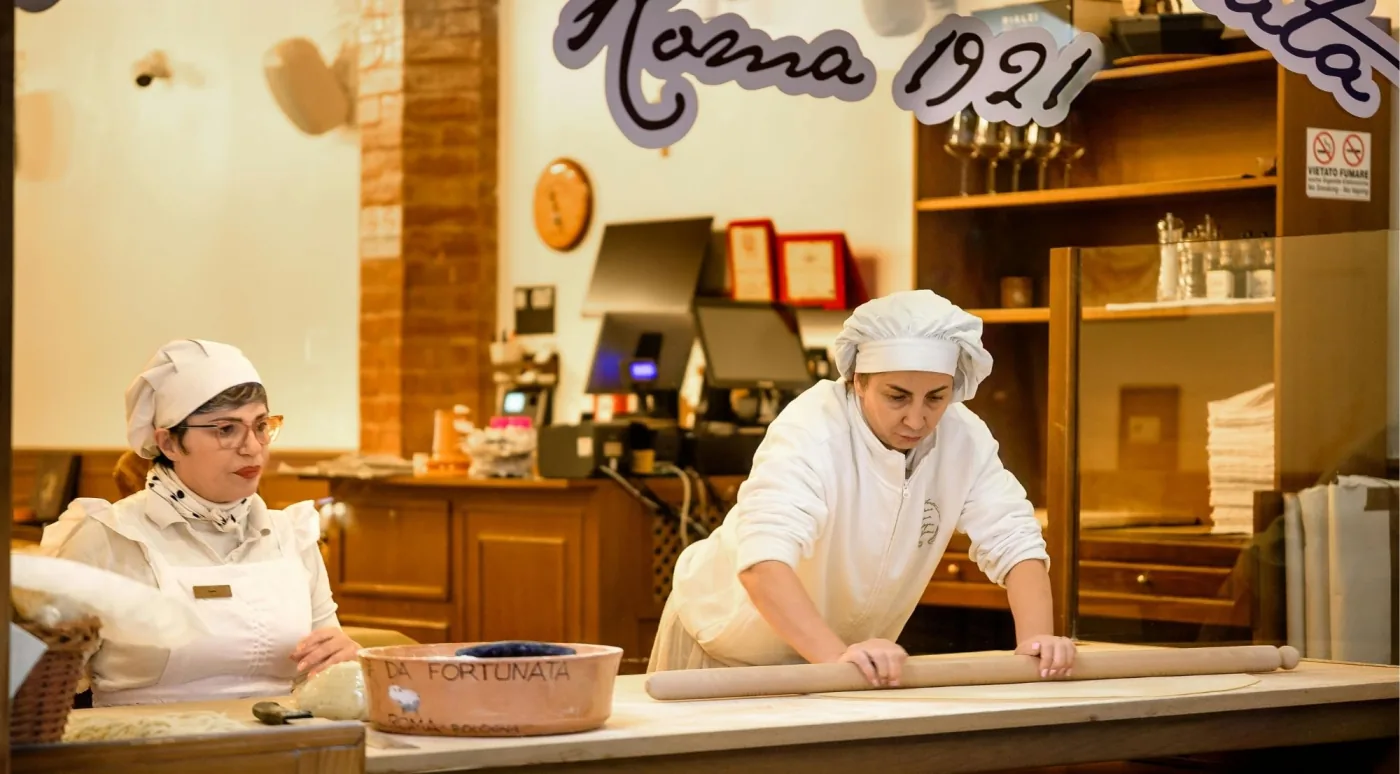
Our pick for that last one: Bologna Food Valley Experience: Factories, Winery and Lunch — from €153, rated 4.93/5 across 145 reviews. A dairy, an acetaia, a winery and a long lunch, departing Bologna. To roll the pasta yourself rather than watch it through a window: Bologna: Pasta Cooking Class, Ragù, Spritz, Wine and Gelato — from €63, rated 4.93/5 across 1,319 reviews.
If that is the layer you want, see our complete guide to Bologna food tours, our Parmigiano Reggiano factory tours guide, and the Emilia-Romagna Food Valley guide. To cook the food yourself, look at Bologna cooking classes; to drink deeper, wine tasting in Bologna and the Colli Bolognesi; and to venture further afield, day trips from Bologna. Comparing your options overall? Start with Bologna tours compared or, if you are travelling the country, Italy food tours. Travelling with dietary needs? See our guide to vegetarian, vegan and gluten-free eating in Bologna.
Practicalities
- Best days: Tuesday to Saturday. Sunday and Monday close many shops, markets and restaurants, including Osteria del Sole on Sundays and several top trattorie on Sunday or Monday.
- August and Ferragosto: a great many family-run trattorie close for the week around 15 August: in 2024 only about one restaurant in three in the city stayed open that week. If you are visiting then, check ahead.
- Book ahead: the marquee trattorie — Anna Maria, All’Osteria Bottega, Trattoria di Via Serra — fill days in advance in summer and at weekends. Book as early as you can.
- Cash or card: cards are widely accepted, but several traditional places and Osteria del Sole are cash-preferred or cash-only. Carry euros.
- Coperto and servizio: most sit-down places add a small per-person coperto, a cover charge of a couple of euros, and some add a servizio percentage. Both are legal and normal — read the menu’s fine print.
- Budget: the whole day can be done modestly if you stand for breakfast, picnic at lunch and drink on Pratello, or scaled up with sit-down meals and grand cafés. Think € to €€ per stop.
- Shoes: wear comfortable ones. The centre is cobblestones.
- Weather: the porticoes make Bologna one of Italy’s most rain-friendly cities to walk.
- Pickpockets: stay aware in the market crush and on crowded aperitivo streets. Keep bags zipped and to the front.
Frequently Asked Questions
Can you do a food tour of Bologna by yourself?
Absolutely. Bologna’s food is concentrated in a small, walkable, portico-covered centre, and this article is a complete self-guided food tour you can follow on your phone. The only things you cannot easily replicate solo are behind-the-counter access and producer visits.
How much does a self-guided food day cost?
It scales with your choices. Standing breakfasts, a market picnic and student-quarter aperitivi keep it firmly in the € range; sit-down trattoria meals, grand cafés and several gelati push it to €€. You pay only for what you eat and drink — there is no tour fee.
What’s the best day of the week to do it?
Tuesday to Saturday. Avoid Sunday and Monday, when markets, many shops and several key restaurants are closed — Osteria del Sole among them on Sundays.
Do you need to book restaurants in Bologna?
For the famous trattorie, yes. Trattoria Anna Maria, All’Osteria Bottega and Trattoria di Via Serra fill days ahead, especially in summer and at weekends. Others, including Osteria dell’Orsa and Sfoglia Rina, do not take bookings, so arrive at opening or expect a queue.
What time do restaurants open in Bologna?
Lunch service runs roughly 12:30 to 2:30pm and dinner from about 7:30pm. Between roughly 3pm and 7pm most kitchens are closed.
Can you get lunch at 4pm in Italy?
Generally no — not a hot, cooked lunch. By 4pm most kitchens have closed until dinner. You can get gelato, coffee, a pastry or a bar snack, but plan your real meal inside the lunch window.
Is Bologna walkable?
Very. The historic centre is compact and flat, and much of it is sheltered under porticoes, so you can walk this entire day comfortably in good shoes, rain or shine.
What should I not order in Bologna?
“Spaghetti bolognese” — it does not exist here. The local dish is tagliatelle al ragù, ragù on fresh egg tagliatelle. Skip fettuccine Alfredo and spaghetti and meatballs too; they are American-Italian, not Bolognese. And do not order a cappuccino after a meal — switch to espresso.
Is a guided food tour worth it if I can do this myself?
It depends what you want. If you value historical and culinary context, curated quality-filtering, and access to shopkeepers or producers you cannot reach alone, a guided tour adds a real layer. If you value spontaneity and saving money, the self-guided route delivers most of the eating for none of the fee.
What’s the best gelato in Bologna?
Cremeria Santo Stefano is the most consistently praised, a Gambero Rosso Tre Coni winner, with Cremeria Cavour and La Sorbetteria Castiglione close behind. For organic and vegan, Stefino Bio is the pick.
How do I know if a gelateria is good?
Look for muted, natural colours — dull-green pistachio, not neon — gelato stored in covered metal tins rather than fluffy piled mountains, seasonal flavours, and short ingredient lists. A visible laboratorio is a good sign.
Ready to eat your way through Bologna?
Save this page, screenshot the timetable, and follow it stop by stop. When you want to go deeper — behind the counters, into a Parmigiano dairy at dawn, or around a cooking-class table — explore our complete guide to Bologna food tours and the rest of our Bologna guides. Buon appetito.
Taste Bologna Like a Local — One Unforgettable Walk
Join 1,870+ guests who rated this experience 4.8/5. Tortellini, mortadella, Parmigiano Reggiano, Lambrusco, and gelato — sampled across the historic centre with an expert local guide. Free cancellation.
Check Availability & Book