What to Eat in Bologna in Winter: 12 Traditional Dishes to Try
What to eat in Bologna in winter: 12 traditional dishes from tortellini in brodo and tagliatelle al ragù to mortadella, friggione and the Christmas cakes certosino and panone.
Forget spaghetti Bolognese: in winter, Bologna serves tiny handmade tortellini in golden broth, ribbons of fresh pasta with slow-cooked ragù and Christmas cakes you rarely find outside Emilia-Romagna.
Quick facts: the defining winter dish is tortellini in brodo · the Christmas cakes certosino and panone are easiest to find in November and December · expect roughly €12–22 for a pasta course in a trattoria.
If you only eat three things in Bologna in winter, choose tortellini in brodo, tagliatelle al ragù and Mortadella Bologna. Together they cover handmade stuffed pasta, a slow-cooked sauce and the city’s famous cured-meat tradition. The menu goes much further, from lasagne verdi and friggione to dense, spiced Christmas cakes.
Most of Bologna’s classics are served all year. Winter makes the soups, broths and heavier pasta dishes more inviting, and the Christmas desserts certosino and panone belong mainly to November and December. For the year-round list of specialities, see our guide to what to eat in Bologna.
To taste several of these dishes in one afternoon, the Bologna: The Ultimate Food Tour with a Local serves tagliatelle al ragù, tortellini, tigelle, mortadella and cotoletta as a full meal over about three and a half hours. It costs from €79 and is rated 4.8/5 from 446 reviews, with drinks included across four or more stops. Winter departures vary, so check dates below.
12 Bologna dishes at a glance
| Dish | What it is | When to try |
|---|---|---|
| Tortellini in brodo | Tiny meat-filled pasta in clear broth | A cold winter lunch |
| Tagliatelle al ragù | Fresh egg pasta with meat sauce | Your first proper meal |
| Lasagne verdi | Green pasta, ragù and béchamel | A substantial lunch |
| Mortadella Bologna | Delicate cooked pork sausage | A market snack or tasting |
| Tortelloni di ricotta e spinaci | Larger pasta filled with cheese and greens | An alternative pasta |
| Gramigna alla salsiccia | Curled pasta in sausage sauce | A casual trattoria meal |
| Cotoletta alla bolognese | Veal cutlet with ham and cheese | A rich dinner |
| Friggione | Slow-cooked onions and tomatoes | A side dish |
| Crescentine fritte | Fried dough with cured meats | A shared starter |
| Passatelli in brodo | Breadcrumb-and-cheese strands in broth | A warming soup |
| Certosino di Bologna | Spiced Christmas fruit-and-nut cake | November–December |
| Panone bolognese | Rich festive cake with chocolate and fruit | The Christmas season |
Winter is also a good time for food experiences beyond the table, and GetYourGuide lists pasta classes in the centre, Quadrilatero market walks, and Food Valley day trips to Parma and Modena for Parmigiano Reggiano and balsamic vinegar:
1. Tortellini in brodo: the defining winter dish
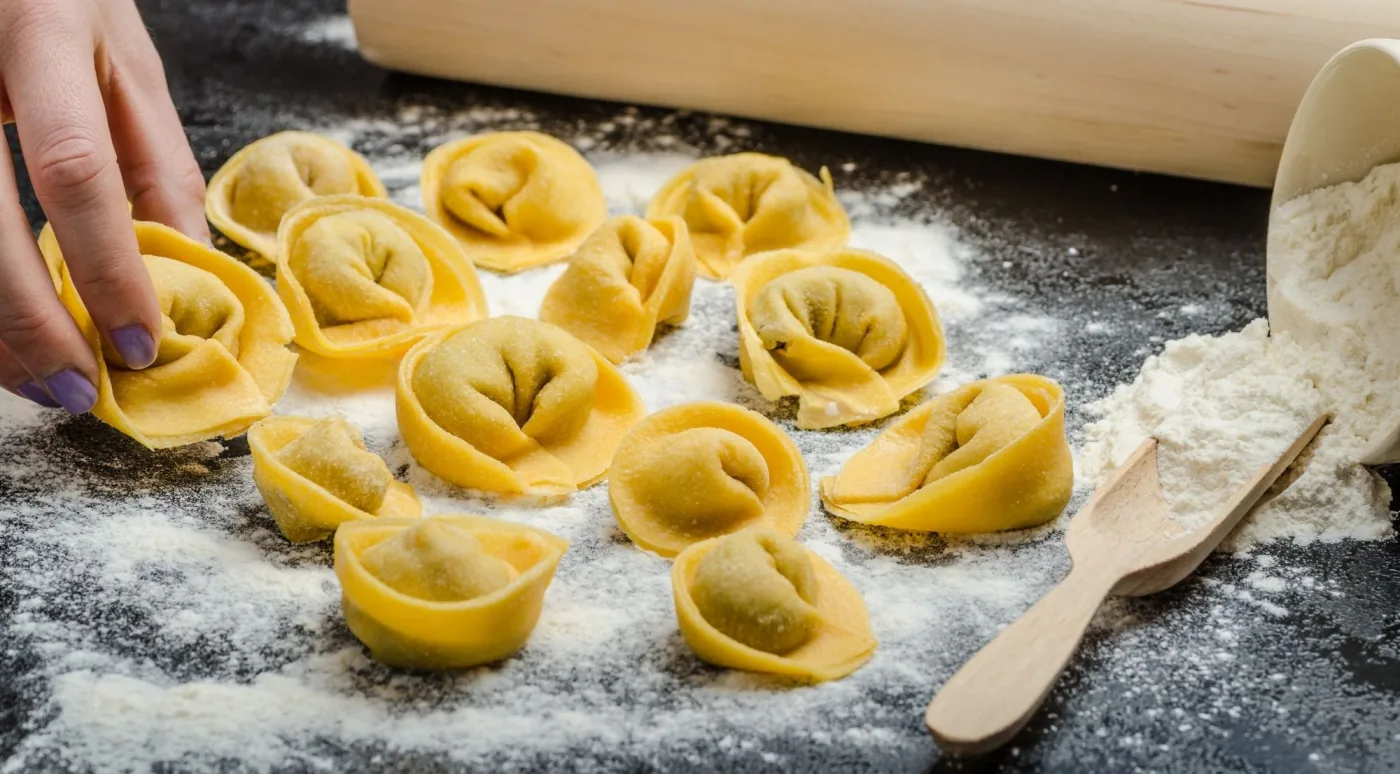
A bowl of tortellini in brodo looks simple: tiny parcels of stuffed pasta in golden meat broth. The pasta takes hours to make by hand, and the broth matters as much as the filling. Traditional Bologna tortellini are filled with pork loin, prosciutto crudo, mortadella, Parmigiano Reggiano and nutmeg, and the broth is usually made with meat, often beef and capon.
What it tastes like: deeply savoury, fragrant and delicate, with no cream or tomato. Where to try it: a traditional trattoria that makes its own fresh pasta. What to order: tortellini in brodo, sometimes listed as di cappone when the broth is made with capon.
Bologna eats it above all at Christmas, but it stays on restaurant menus well beyond the holidays. Traditional tortellini in brodo is not vegetarian, even though the soup looks clear.
Learn the fold: Bologna Welcome sells a two-hour Portici Academy tortellini class for €54. Ask whether a workshop teaches the dough and filling as well as the shaping. No GetYourGuide class in Bologna focuses on tortellini; our pick for a hands-on pasta class is the Bologna: Pasta Cooking Class, Ragu, Spritz, Wine & Gelato (from €63, 4.9/5 from more than 1,300 reviews), where you roll tagliatelle by hand and eat it with ragù.
2. Tagliatelle al ragù: Bologna’s real pasta classic
The dish sold abroad as “spaghetti Bolognese” isn’t the local pairing. In Bologna, ragù is served with broad ribbons of fresh egg tagliatelle, which hold the slow-cooked sauce well.
Ragù alla bolognese is meat-rich and cooked slowly with aromatic vegetables, wine and a restrained amount of tomato; respected recipes vary from kitchen to kitchen. It isn’t a tomato sauce with mince added at the last minute.
Order it when: you have time for a proper trattoria lunch and want one unmistakable local speciality. Some food tours include fresh pasta and shorter market tastings may not: the Bologna: Walking Food Tour and Highlights with a Local Guide (from €52, 4.8/5 from 314 reviews) includes a tagliatelle al ragù tasting at a restaurant.
3. Lasagne verdi alla bolognese: a warming baked dish
Traditional lasagne verdi layers thin green sheets of egg pasta made with spinach, ragù, béchamel and Parmigiano Reggiano. The result is soft, intensely savoury and filling. The green pasta is one of the main differences from lasagne served abroad.
A portion can be enough for lunch on its own. Choose a traditional restaurant or a fresh-pasta shop that sells prepared dishes; the most central tourist restaurants aren’t always the best.
4. Mortadella Bologna: taste it freshly sliced
This delicately seasoned cooked pork sausage has visible white cubes of fat and a mild, aromatic flavour. Good Mortadella Bologna tastes quite different from generic sandwich meat. Look for the IGP protected geographical indication, which covers production to a defined standard across an area much larger than the city.
The simplest tasting is mortadella sliced to order at a salumeria, in a sandwich or on a board with cheese. Some restaurants serve mortadella mousse or more elaborate dishes.
Where to explore: the Quadrilatero, near Via Pescherie Vecchie. A food guide can explain what sets each product apart, though you can also taste them on your own. The Bologna: Walking Food Tour with a Local Expert (from €78, 4.8/5 from more than 2,000 reviews) includes mortadella and Parmigiano Reggiano among more than fifteen tastings.
5. Tortelloni di ricotta e spinaci: larger stuffed pasta
Don’t confuse tortelloni with tiny meat-filled tortellini. Tortelloni are larger and usually filled with ricotta and spinach or other leafy greens, then served with melted butter, sage and Parmigiano Reggiano.
The filling can be meat-free, but strict vegetarians should check the cheese rennet and the sauce. Tortelloni aren’t a winter-only dish, though they make a good cold-weather choice, and their shape is a forgiving one for beginners in a pasta class.
6. Gramigna alla salsiccia: everyday comfort food
Gramigna is a short, curled pasta that catches sauce well. In this regional classic it comes with a sausage sauce, made with tomato or cream depending on the kitchen.
It is less famous abroad than tagliatelle al ragù but common in local cooking. Order it at a relaxed trattoria when you want something typically Emilian without eating the same pasta every day.
7. Cotoletta alla bolognese: a rich cutlet
This isn’t a Milanese cutlet. The Bolognese version starts with breaded veal and adds prosciutto and Parmigiano Reggiano, with broth used in the final cooking. The cutlet comes out softer and richer than a plain crisp one.
Order it as a secondo when you’re hungry, perhaps without a large pasta course first. It makes an indulgent winter dinner and is one of the region’s most distinctive meat dishes.
8. Friggione bolognese: a humble local side
Friggione is a slow-cooked mixture of onions and tomatoes. Its flavour depends on patience: the onions turn soft, sweet and concentrated. Served with bread or alongside meat, it is quiet, home-style cooking.
Many versions are plant-based, but ask about the cooking fat if you need a vegetarian or vegan dish. Don’t expect a full pasta course; friggione usually appears among the side dishes.
9. Crescentine fritte: warm fried dough and cured meats
These are pieces of fried dough, usually served with cured meats and cheeses. They belong to the region’s wider tradition of fried breads, but the names shift as you travel across Emilia-Romagna. Around Modena, tigelle usually means small round griddle breads, while crescentine in Bologna often means the fried version.
Order them as a shared starter or an informal meal. Hot dough with salty cured meats is particularly satisfying on a cold evening.
10. Passatelli in brodo: beyond tortellini
Passatelli are made from breadcrumbs, Parmigiano Reggiano, eggs and seasonings, pressed into soft thick strands and cooked in broth. They aren’t conventional sheet pasta and have no separate filling.
The dish belongs to the wider traditions of Emilia-Romagna and Romagna more than to Bologna alone, but you’ll find it in the city too. Order it when you want a second kind of broth dish after trying tortellini.
11. Certosino di Bologna: the traditional Christmas cake
Also called panspeziale, certosino is dense, spiced and rich with honey, nuts, candied fruit and chocolate. It has none of panettone’s airy crumb. Its compact texture and complex sweetness suit a small slice with coffee.
A traditional local recipe was deposited with Bologna’s Chamber of Commerce in 2001. Look for it in traditional bakeries in November and December. In January it may or may not be on sale, and by February you are unlikely to find it.
12. Panone bolognese: a festive family favourite
Panone is another rich Bolognese Christmas cake, usually made with cocoa or chocolate, dried or candied fruit and nuts. Recipes differ between families and bakeries. It shares many ingredients with certosino but is a different cake.
Try both over the Christmas period to get to know the local baking tradition. If you want to take one home, ask the bakery about shelf life and how to pack it.
Which foods are seasonal?
| Food | November | December | January–February |
|---|---|---|---|
| Tortellini in brodo | Common and appealing | Festive favourite | Usually on traditional restaurant menus |
| Tagliatelle, lasagne, mortadella | Year-round | Year-round | Year-round |
| Mushrooms and truffles | On autumn menus | Depends on the season | Limited or changing |
| Certosino and panone | Bakeries start selling them | Easiest to find | Hard to find after the holidays |
Chestnuts, porcini and truffles from the region may appear on autumn menus, but they aren’t specifically Bolognese products.
Where to eat and shop
Quadrilatero: the historic food-shopping quarter next to Piazza Maggiore, lined with salumerie, pasta makers and delis. Mercato delle Erbe: a covered market hall with food stalls and places to eat, useful in the rain. Mercato di Mezzo: an easy indoor eating stop inside the Quadrilatero. For tortellini in brodo or tagliatelle al ragù, a good traditional trattoria usually beats a market stand, since few stalls cook a full dish.
Opening hours vary from shop to shop. Mornings are best for market activity, and aperitivo hour brings a different evening atmosphere.
How to read a Bolognese menu
| Menu term | Meaning | Example |
|---|---|---|
| Antipasti | Starters | Mortadella, crescentine |
| Primi | Pasta, soup and first courses | Tortellini, tagliatelle |
| Secondi | Main meat or fish courses | Cotoletta |
| Contorni | Sides | Friggione |
| Dolci | Desserts | Certosino in season |
Useful phrases: La pasta è fatta in casa? (“Is the pasta homemade?”); Il brodo è di carne? (“Is the broth made with meat?”); C’è un’opzione vegetariana? (“Is there a vegetarian option?”). A coperto is a cover charge, not a tip, and the menu should show the amount.
You don’t need to order every course. A pasta dish and a dessert make a satisfying lunch.
What to drink
Try Pignoletto from the Colli Bolognesi, Sangiovese from Romagna or a dry Lambrusco from the wider region. Not all Lambrusco is sweet. You don’t need wine for a good meal, and coffee and soft drinks are everywhere. Our Bologna wine tasting guide covers the local wines in more depth.
One-day winter food itinerary
9 am: coffee and a pastry. 10:30 am: browse the Quadrilatero and taste a little mortadella or cheese. 12:30 pm: sit down for tagliatelle al ragù or tortellini in brodo. 2:30 pm: the Archiginnasio, the historic porticoes or a pasta workshop if one has space. 6 pm: aperitivo with a shared snack. 8 pm: dinner with a different traditional dish, if you’re still hungry. On a December visit, look for a slice of certosino or panone.
This is a sample day, not a guarantee of opening hours or class times. A cooking class that ends with a full meal should replace a large lunch instead of following one. Our Bologna in winter guide has more ideas for the rest of the day.
Costs, allergies and food tours
Rough budgets: espresso €1.30–2; pastry €1.50–3; mortadella snack €5–9; pasta course €12–22; meat main course €18–28; glass of local wine €4–7. These are indicative figures, not a survey of current menus.
Bolognese traditions rely on wheat, eggs, dairy and pork, and the Christmas cakes often contain nuts. Strict vegetarians should check for animal rennet; coeliac visitors need safe preparation and cross-contact controls. Some guided food tours cannot accommodate coeliac disease. Our guides to vegetarian food tours in Bologna and dietary options on a food tour go into the details.
A food tour helps if you want explanations and several organised tastings, and a cooking class suits you better if you want to roll dough or shape pasta yourself. Don’t assume a tour includes a full pasta lunch unless the listing says so. Our picks: the Ultimate Food Tour with a Local (from €79) if you want a full meal on the move, or the Pasta Cooking Class, Ragu, Spritz, Wine & Gelato (from €63) if you’d rather cook. Our guide to the best Bologna food tours in winter compares the other options.
Frequently asked questions
What food is Bologna famous for?
Tortellini, tagliatelle al ragù, lasagne verdi and Mortadella Bologna, among other regional specialities.
What is the best thing to eat in Bologna in winter?
Tortellini in brodo: warm broth and tiny handmade meat-filled pasta.
Is spaghetti Bolognese traditional?
Not as a local pairing. Tagliatelle with ragù is the classic Bolognese combination.
What is the difference between tortellini and tortelloni?
Tortellini are small and usually meat-filled; tortelloni are larger and often filled with ricotta and spinach.
What is the traditional Christmas dessert?
Certosino and panone are Bologna’s own Christmas cakes.
Is Bologna good for vegetarians?
There are options, but meat-filled pasta, ragù, meat broths and cheeses made with animal rennet call for care.
Is a food tour worth it?
It can be, for learning and tasting variety. For the cheapest meal, shopping and eating on your own costs less.
Final verdict
The essential winter trio is tortellini in brodo, tagliatelle al ragù and mortadella. Add lasagne verdi, friggione or gramigna to go beyond the obvious, and look for the Christmas cakes in December. Above all, leave time for one unhurried meal instead of turning Bologna into a checklist.
Sources and further reading
Taste Bologna Like a Local — One Unforgettable Walk
Join 1,870+ guests who rated this experience 4.8/5. Tortellini, mortadella, Parmigiano Reggiano, Lambrusco, and gelato — sampled across the historic centre with an expert local guide. Free cancellation.
Check Availability & Book